

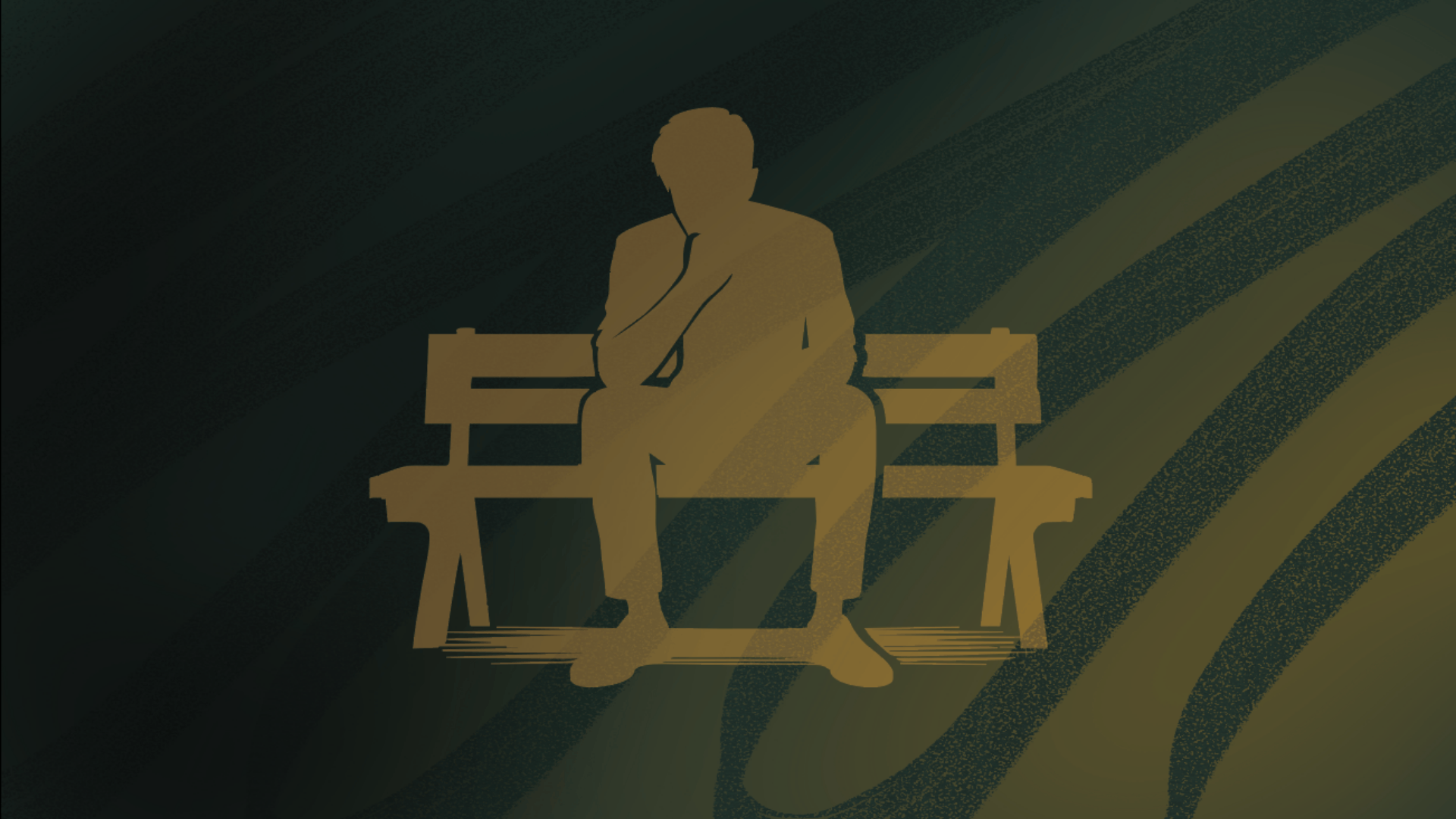
Illustration by Liz Zonarich/Harvard Staff
Health
‘Alcoholic’
Term conjures outdated stereotypes about an illness that afflicts 28 million Americans, says expert
A series about meanings
People just aren’t drinking the way they used to.
“As recently as the late 1990s or early 2000s, 85 percent or more of high school seniors said they drank in the past year. Now that number is down to about 42 percent,” said Kathryn McHugh, a Harvard Medical School associate professor of psychology at McLean Hospital and the director of the McLean Hospital Stress, Anxiety, and Substance Abuse Laboratory. “Those are whopping changes in effectively less than a generation.”
Despite those promising trends, alcohol remains a major public health concern, McHugh said. About 28 million Americans had alcohol use disorder in 2024.
McHugh’s lab focuses on the intersection of substance use and anxiety. She says even as Americans’ relationship to drinking has changed, so has the clinical understanding of alcohol use disorder, or, to use the outdated term, alcoholism.
For the latest installment of “One Word Answer,” we asked McHugh to explain the shifting paradigm that reframes addiction as an illness like any other.
The term “alcoholic” harkens back to an old model of substance use that sees it as a permanent feature of your personality or even a moral weakness. The term was used in the 1950s and ‘60s, in very early diagnostic systems for psychiatric disorders, when we didn’t even have a way of measuring it. Decades of research later, we now have a much better understanding of alcohol problems, how to measure them, and how to treat them effectively.
As our understanding of the illness has evolved, so too has our terminology. Over that time, there’s been a big push away from “alcoholism” as a stigmatizing term that implies the illness is a feature of the person’s identity or personality. Starting in the 1980s, the term was changed to either alcohol abuse or alcohol dependence, and more recently, in 2013, it was changed again to alcohol use disorder.
But that said, there are a lot of people who find it helpful, given the significant impact the disorder has had on their life, to identify as “alcoholic.” It’s an interesting push-pull from the perspective of stigma: We’ve really moved away from the term as a field, but there are some people who find it powerful as individuals.
Historically, there was this idea that once you cross a certain threshold, once you’re “an alcoholic,” abstinence is the only option. But the data just doesn’t support that. There are many different paths.
There are some people who do spend many years in and out of treatment, who spend much of their lives struggling with this illness despite wanting so badly to be sober. And there are people who are able to reduce their alcohol consumption to a lower level where it’s not causing any problems. There are also people who decide to be sober for the rest of their lives and are able to make and sustain that change. One thing researchers are very focused on now is how to personalize treatment to meet the needs of each person and to help them safely reach whatever their goal might be, from reducing harm to fully abstaining from alcohol.
Similarly to how we thought of addiction as a personality trait, there used to be a theory that the type of drug a person used mattered a lot; that if someone was struggling with pain, they might seek out opioids, or if they were struggling with anxiety, they might misuse an anxiety medication or alcohol. But that idea falls apart too, as people often will seek out whatever escape might be available.
Some key variables are distress — how low is their mood, how high is their anxiety? — but also how they interpret that distress. If someone is feeling very intolerant of their anxiety, they’re more likely to want to escape it. It’s that sense of, “I can’t handle this feeling, I need to get rid of it” that can put people down a path towards substance use or even just avoidance of daily activities. That drive for escape can lead people to any number of behaviors that provide a “quick fix,” whether it’s alcohol, other drugs, unhealthy foods, or even phone use or social media. Any of these behaviors can cause problems if they’re relied on too much.
I encourage my patients to be on the lookout for the markers of distress intolerance. If you notice yourself thinking things like, “I can’t handle this; I just don’t want to feel this way anymore,” it’s a good sign you’re in that mode and at risk of making an unhealthy decision to try to escape what you’re feeling.
Practice sitting with distress. You can get better at letting yourself sit with boredom or anxiety or pain or tiredness, especially just by noticing it without judging it and without evaluating it in any way. It’s just, “This is how I’m feeling; I don’t have to do anything about it.” You can think of it as buying yourself time to make a good decision.
I’m encouraged by the new cohort of people who are drinking less, and by the thoughtfulness I see around drinking as just another health behavior we need to be mindful of, like getting enough sleep and getting exercise. But there are still millions of people who suffer from alcohol use disorder, and there are more deaths attributable to alcohol in the U.S. than there are to drug overdose. This is still a major public health issue that harms a lot of people, a lot of families, and still needs a lot of attention.