

Health
Study links ultraprocessed foods to precancerous polyps in younger women
Risk aligns with quantity in research that might offer clue to rise in under-50 cancer cases
Colorectal cancer diagnoses have become increasingly common in adults 50 or younger in recent years, particularly in high-income countries like the U.S. The drivers of the trend are unclear, but a new study led by Harvard and Mass General Brigham researchers, as part of the Cancer Grand Challenges PROSPECT team, suggests an important link to ultraprocessed foods.
By analyzing diets and endoscopy results, the study of almost 30,000 women found that participants who consumed the highest levels of ultraprocessed foods had a 45 percent higher risk of developing adenomas, which can be precursors of early-onset colorectal cancer, compared with participants who consumed the lowest levels. The results are published in JAMA Oncology.
“Our findings support the importance of reducing the intake of ultraprocessed foods as a strategy to mitigate the rising burden of early-onset colorectal cancer,” said senior author Andrew Chan, a gastroenterologist at the Mass General Brigham Cancer Institute and a professor at Harvard Medical School. “The increased risk seems to be fairly linear, meaning that the more ultraprocessed foods you eat, the more potential that it could lead to colon polyps.”
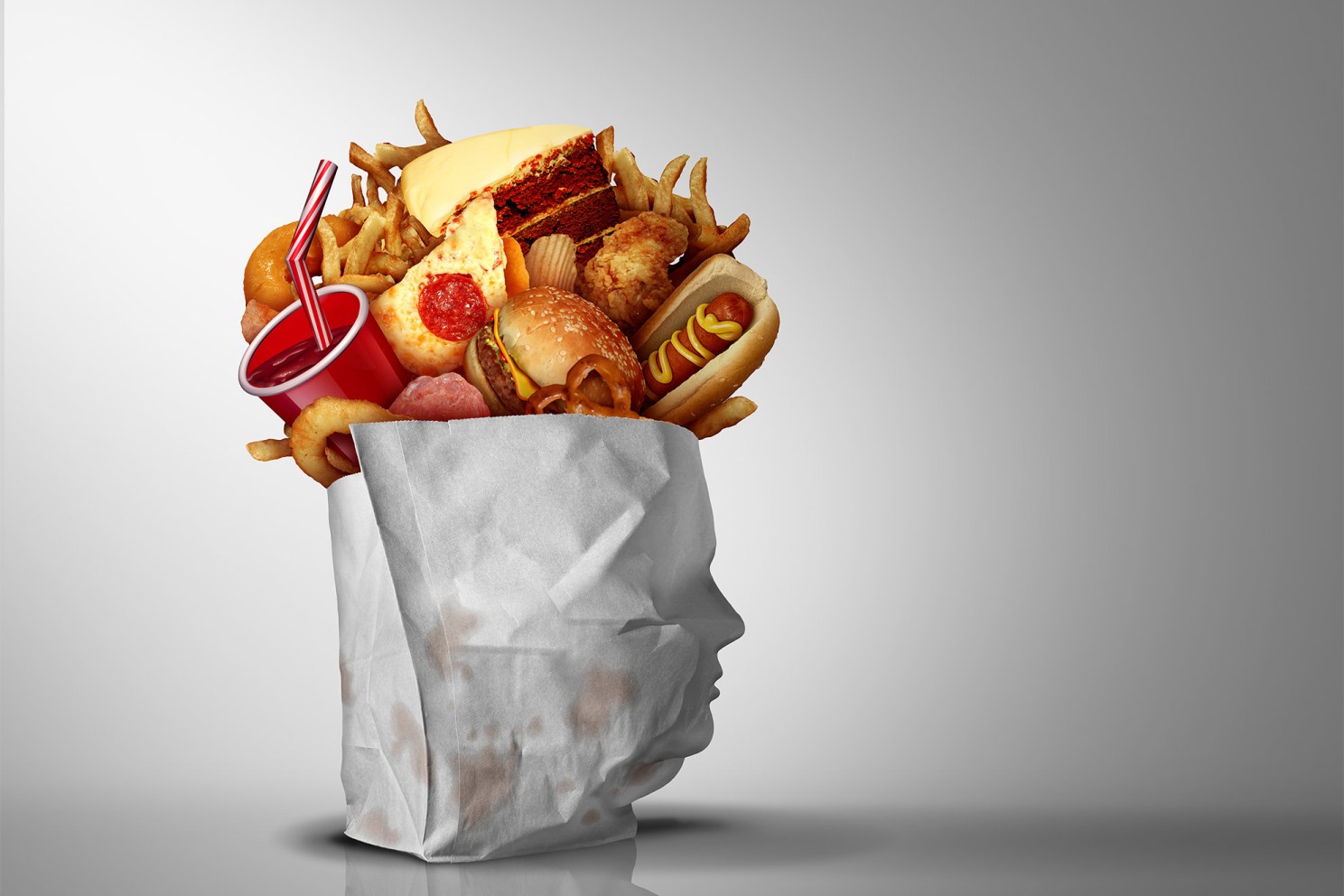
The consumption of ultraprocessed foods — ready-to-eat foods that often contain high levels of sugar, salt, saturated fat, and food additives — has risen in parallel to the rise of early-onset colorectal cancer. Chan’s research group previously found an association between ultraprocessed foods and colorectal cancer more broadly, but this is the first study to link ultraprocessed foods with early-onset colorectal cancer.
“Even after accounting for all these other risk factors, the association with ultraprocessed foods still held up.”
Andrew Chan.
The researchers analyzed data from the Nurses’ Health Study II, a long-term prospective study of female nurses who were born between 1947 and 1964 — a generation that is known to be at elevated risk for early-onset colorectal cancer. They analyzed 24 years’ worth of data from 29,105 female nurses who received at least two lower endoscopies before they turned 50 to screen for colorectal cancer precursors. The participants also completed dietary surveys every four years, from which the researchers estimated their average daily intake of ultraprocessed food. Though diet was self-reported, this type of survey has been validated for its ability to accurately reflect a person’s dietary patterns.
On average, participants consumed 5.7 servings of ultraprocessed foods per day, which amounted to 35 percent of their total daily calories — slightly lower than the national average in the U.S.
From the endoscopy results, the researchers identified 2,787 participants who developed precursor polyps for colorectal cancer. Women who consumed the highest amounts of ultraprocessed foods — 10 servings per day on average — had a 45 percent higher risk of developing conventional adenomas, the precursor most associated with early-onset colorectal cancer, compared with those who consumed the lowest amounts (three servings per day on average). There was no association between ultraprocessed food intake and serrated lesions, another type of precursor, but one that develops more slowly and is less commonly associated with early-onset colorectal cancer.
“One of the strengths of our study was that we had detailed information about other colorectal cancer risk factors in the participants, such as such as body mass index, Type 2 diabetes, and low fiber intake,” said Chan. “Even after accounting for all these other risk factors, the association with ultraprocessed foods still held up.”
The authors noted that ultraprocessed foods do not fully explain the rise in early-onset colorectal cancer, and that they are working to identify other risk factors. They’re also working on ways to better categorize ultraprocessed foods, since some foods in this category might be more harmful than others.
“Diet isn’t a complete explanation for why we’re seeing this trend — we see many individuals in our clinic with early-onset colon cancer who eat very healthy diets,” said Chan. “Identifying other risk factors for early-onset colorectal cancer is one of the focuses of the work that we’re leading here at the Mass General Brigham Cancer Institute.”
The research described in this article received funding from the National Cancer Institute.