
Health
Your digital twin might save your life
Illustration by Liz Zonarich/Harvard Staff
AI, statistics offer new possibilities for personalized medicine
When neurologist Steven Arnold is deciding whether to treat an Alzheimer’s patient with a new therapy, he relies on averages.
“Many people get put on something because it showed a statistically significant though slight benefit in a few thousand diverse people in a big placebo-controlled trial,” said Arnold, principal investigator at the Alzheimer’s Clinical & Translational Research Unit at Massachusetts General Hospital and a professor of neurology at Harvard Medical School. “They then just stay on it forever, because we think maybe it is slowing the decline more than the placebo.”
Arnold is frustrated with the status quo in medicine of doctors treating individual patients using results gathered from groups. He imagines a more personalized approach: understanding whether a specific medication is helping a specific patient — or even whether it’s likely to help before it’s ever prescribed.
One emerging solution that’s showing promise: digital twins.
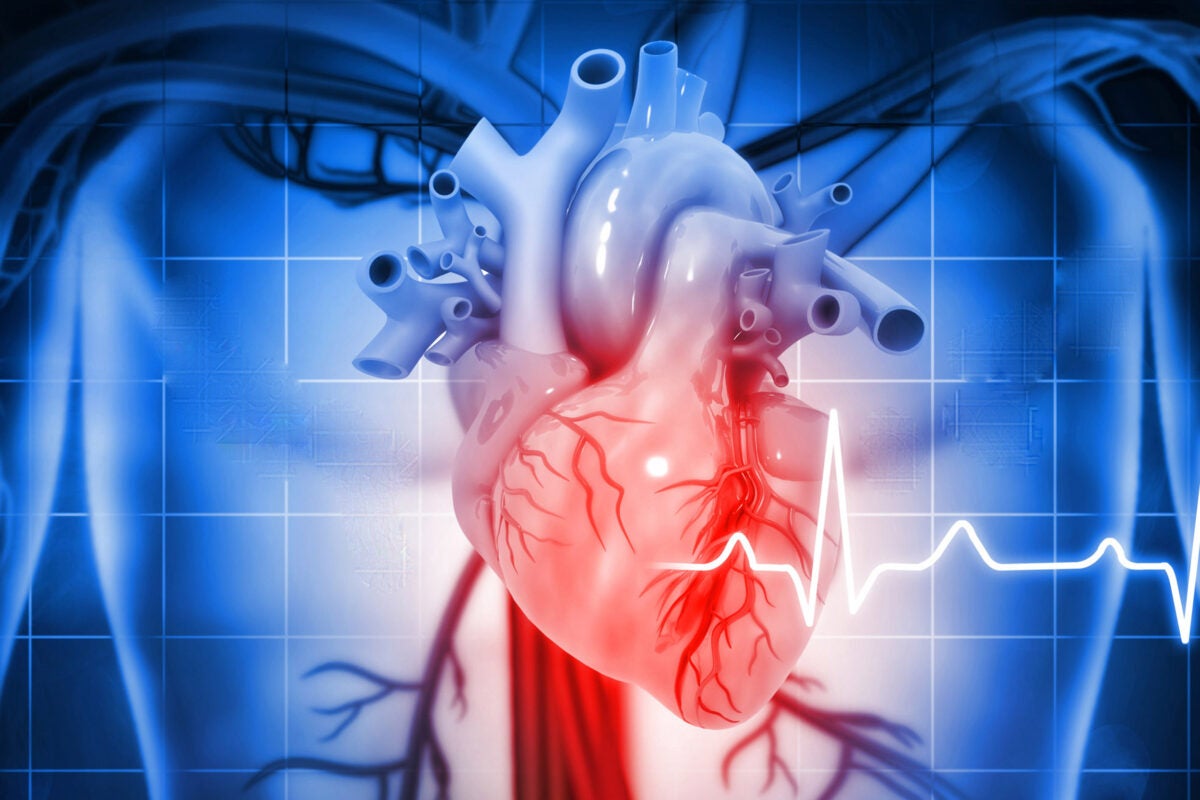
A digital twin is a virtual model of a person, or a part of a person, that doctors can use to test treatment decisions, like an engineer might stress-test a simulated building against digital earthquakes. Fueled by increasingly rich health data from wearables, medical records, and large national cohorts, and powered by novel statistical methods and artificial intelligence, the once-speculative technology is moving closer to a reality.
Digital twins can exist at multiple biological scales — cellular models, whole-patient simulations, or synthetic cohorts that represent entire demographics. Researchers across Harvard are developing all three.
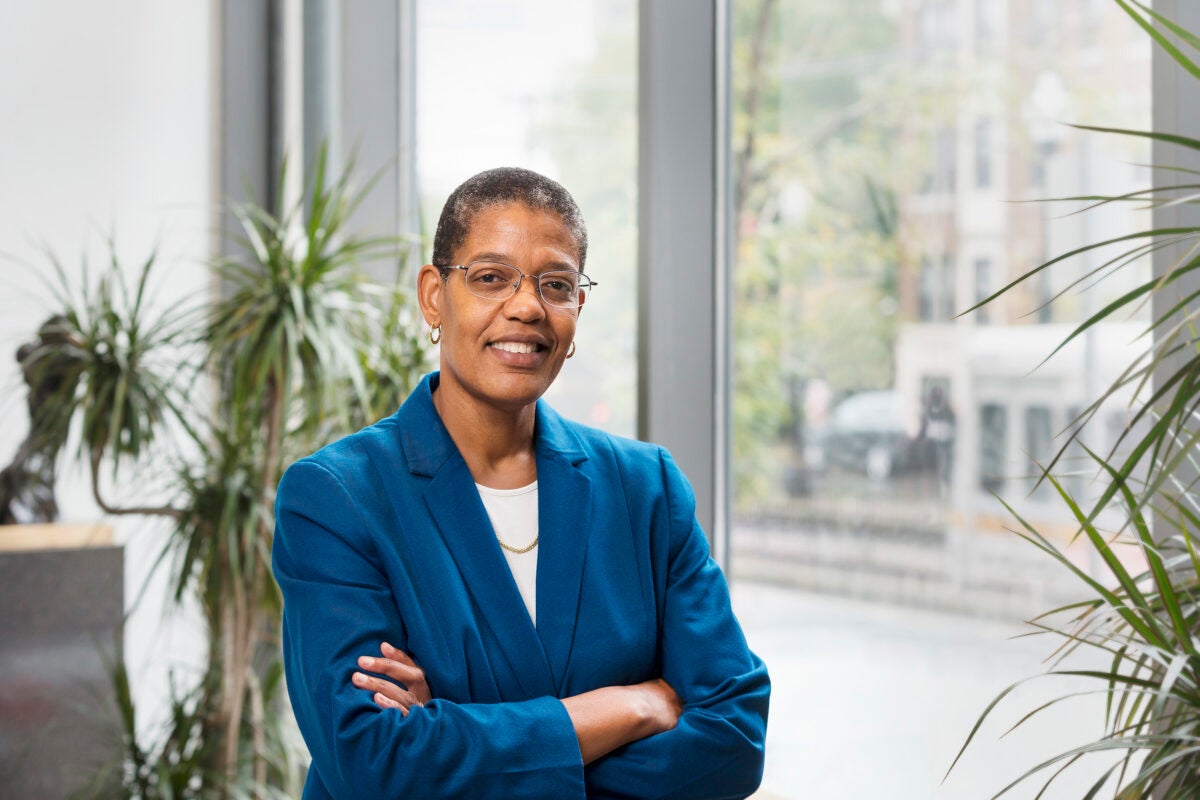
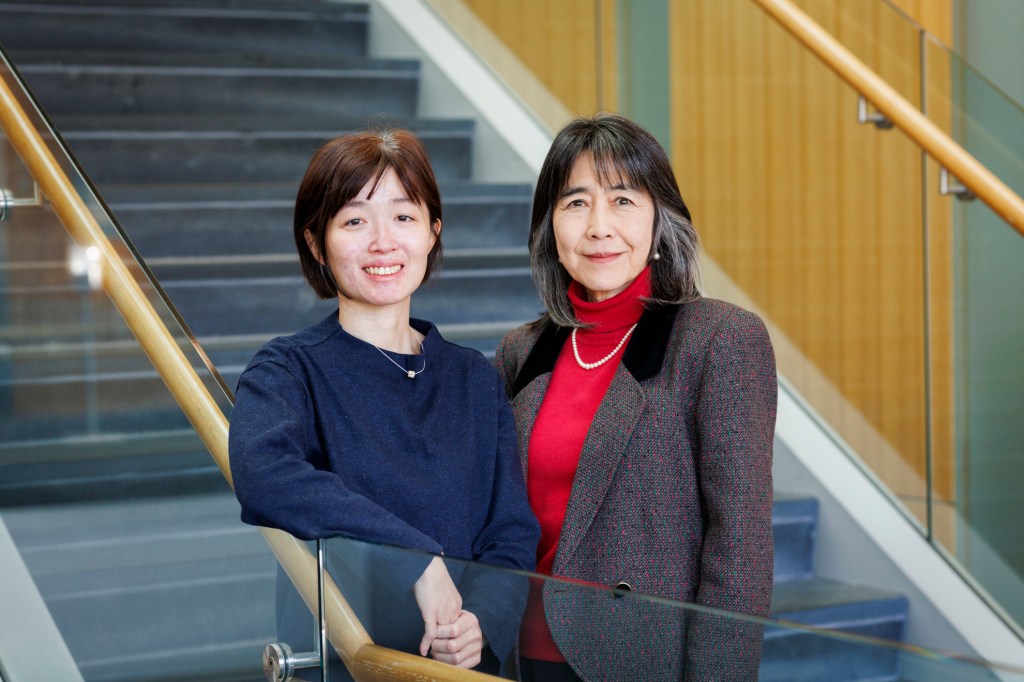
Chao-Yi Wu (left) and Hiroko Dodge.
Niles Singer/Harvard Staff Photographer
Hiroko Dodge, director of research analytics at the MGH Interdisciplinary Brain Center and a professor of neurology at the Medical School, uses digital twins to create chatbots that mimic the speech pattern of each participant in her behavioral intervention trial, which aims to improve cognition in Alzheimer’s patients through conversation.
“These twins allow us to validate our early detection methods for cognitive decline by analyzing each patient’s conversational patterns — without needing to recruit new patients,” Dodge said. “This is a typical digital-twinning application, but many other approaches also fall broadly under the category of digital twinning.”
“These twins allow us to validate our early detection methods for cognitive decline by analyzing each patient’s conversational patterns — without needing to recruit new patients.”
Hiroko Dodge
Alongside Dodge, Mass General Research Institute investigator Chao-Yi Wu uses statistical manipulations to help clinicians like Arnold more precisely determine if a treatment will benefit specific patients.
“Everybody is different,” said Wu, who is also an assistant professor of neurology at the Medical School. “Everybody can take the same painkiller, but some people get a response from it and some don’t feel the difference. That’s the intuition: If we have a twin, if we have a digital person that’s similar to us, we can test different conditions to help with clinical decision-making.”
Building off the recently released data of some 50,000 patients with Alzheimer’s disease and related dementias, Wu can create multiple digital look-alikes that share the patient’s age, gender, race, socioeconomic background — and even more obscure metrics that have been correlated with Alzheimer’s progression, such as walking speed.
“A person can have 100 twins. Based on those 100 twins, you can compare your cognitive trajectory after you receive the medicine versus those 100 twins’ cognitive trajectory, and in a statistical way you can understand whether the change is real or just random noise,” she said.
For clinicians like Arnold, the comparisons could offer a finer-grained view of whether a therapy is actually working.
“One of the biggest challenges in dementia treatment is the heterogeneity of patients,” said Dodge. “Patients often have mixed etiologies and varying levels of person-specific cognitive reserve, both of which influence clinical outcomes. As a result, a treatment that shows promise in a randomized controlled trial may work very well for some individuals but not others. Knowing the trajectory a specific person would have followed without treatment could significantly increase patient care.”
Wu and Dodge also see digital twins’ potential to create entire patient populations, what they call synthetic cohorts, to simulate entire clinical trials before spending time and money on real-world research. In a recent paper, Wu used statistical methods generated by a synthetic control group for a randomized controlled trial and found that her synthetic patients responded similarly to the real-life placebo group in Dodge’s research studying the effect of conversation on cognition in Alzheimer’s patients.
“We need better tools, a better method for understanding who responds and who doesn’t respond,” Wu said. “Digital twinning is a cost-effective way to do it.”
“We need better tools, a better method for understanding who responds and who doesn’t respond.”
Chao-Yi Wu
Meanwhile, Marinka Zitnik, an associate professor of biomedical informatics at the Medical School and an associate faculty at Kempner Institute for the Study of Natural and Artificial Intelligence at Harvard University, is using artificial intelligence to build digital twins at a cellular scale.
Zitnik has developed an AI tool she calls COMPASS, which analyzes personal omics and clinical health data. Through her lab’s ToolUniverse system, COMPASS can be linked with large language models to create chatbots that doctors can interact with just like they would interact with ChatGPT.
In a trial version of the system, a clinician — say, an oncologist — can upload biopsy data from a patient’s tumor microenvironment, along with as much other health data as is available, such as medication history or blood pressure. The system harnesses AI to analyze far more information than a clinician could manage previously.
“Now the clinician can ask this model to perform various analyses,” Zitnik explained. “‘What’s the likelihood of the patient’s favorable response to this specific immunological drug?’ And the chatbot will now provide an answer and discuss.”
Effectively, your doctor could have a conversation with a synthetic version of your cells.
For all its potential, digital twinning is still in an early stage — and there’s no clear consensus on what a full twin would look like. Both Wu’s synthetic cohorts and Zitnik’s cellular chatbots are proofs of concept. Still, researchers say the timing is right.
“This conversational interface is possible now with large language models over the last three or four years; it wasn’t possible 10 years ago,” Zitnik said. “There’s been an order of magnitude increase in enthusiasm and the number of people working on this idea of digital twins because we see the opportunity now with AI.”