


Health
AI use surging for mental health help among young people
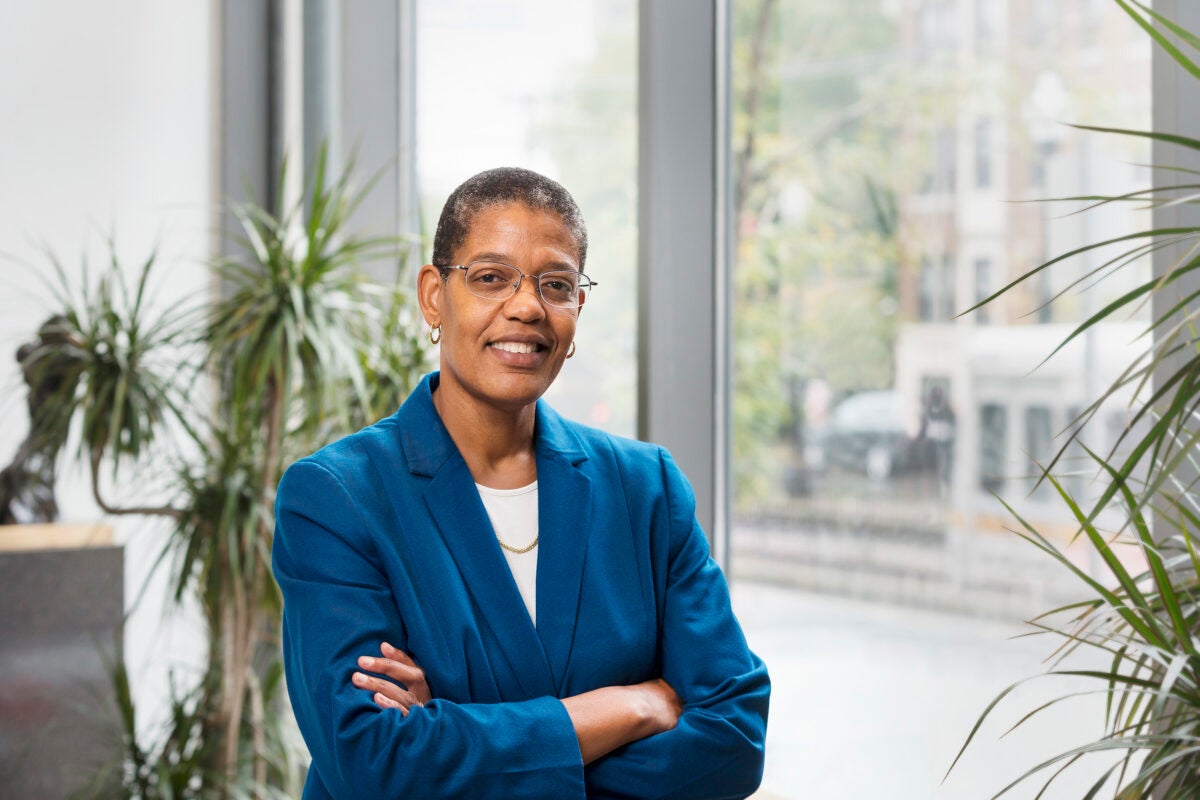
Hao Yu.
File photo by Stephanie Mitchell/Harvard Staff Photographer
Survey researcher says popularity may help fill gap between rising national problem, shortage of clinicians — provided counsel is sound
The question is no longer whether young people are using AI for mental health care, but the soundness of the advice they receive, health officials say.
A recent survey showed that the use of AI chatbots for mental health care among adolescents and young adults has increased 60 percent in just a year, a trend that survey organizers said is likely to continue.
Hao Yu, Harvard Medical School associate professor of population medicine at the Harvard Pilgrim Healthcare Institute, led the study, which had 1,727 participants.
Yu said as AI helps fill a treatment gap left by a rising problem among young people in the U.S. amid a shortage of mental health professionals, the focus should now turn to ensuring the counsel being offered is helpful and not harmful. The interview has been edited for clarity and length.
Gazette: What did your survey find?
Hao Yu: We did a similar study last year, and at that time we found one in eight young people, between the ages of 12 and 21, use AI for mental health problems. This year we found an even higher proportion, almost one in five. That means nearly 20 percent of young people in this country are using AI for mental health advice. That’s a rapid increase in one year.
Not surprisingly, we found variation in AI use across youth groups, with relatively older youth more likely to be using AI, and females more likely to use AI for mental health issues.
It may surprise some that we found the majority of youth using AI did not disclose their use to any adults, either parents or physicians. That might be concerning, because there is misinformation available through different AI models, which are not designed to provide mental health advice.
So, we would encourage parents and physicians to talk with their youth regarding their potential use of AI. They may be able to identify if their child has a mental health issue or help their child distinguish between accurate information and the misinformation we know is available online.
What does this tell us about the state of young adult and adolescent mental health care today?
This definitely shows that there’s a big issue facing the U.S. today. On one side, we have a rapid adoption of AI across different parts of our society. On the other, there is an increased prevalence of mental health issues among young people. Putting these two together makes it not so surprising when we see that youth are increasingly turning to AI for mental health advice.
Does it also highlight that there’s not enough capacity in our mental health care system?
Our healthcare system has an acute shortage of psychiatrists, especially child psychiatrists, and only half of those with mental health needs actually receive mental health treatment.
So, if a youth has mental health issues, AI offers some advantages. AI is patient. AI is available anytime, 24/7. You don’t need an appointment to talk with AI, and AI is nice. It’s rare for AI to be harsh or become impatient. So there are advantages, especially for people living in rural or remote areas with severe mental health workforce shortages.
How much do we know about the quality of the responses that come from these general-use AI chatbots? Is it still a concern that that kids and young adults may get bad, even harmful advice?
That’s still a concern. And it’s true that tragedies like suicide attempts have happened when youth talked with AI about mental health issues. AI companies promised they would install guardrails but there’s a lack of empirical evidence about how those promises are being kept.
Beyond this specific study, many researchers are interested in assessing the safety and efficacy of mental health advice offered by AI. More people are paying attention, so we’d hope there would be some improvement, but that remains to be seen.
The paper mentions that these AI models are designed to be friendly, agreeable, and flattering. Might kids also be getting information that is reinforcing in a positive, but still unhelpful way?
Most AI models try to be appealing, flattering, as a way to keep their customers, and many people, especially youth, easily hooked. But it’s still a concern that the advice, the information provided by AI, be really useful.
In our study, we found that the vast majority of youth, over 90 percent, say the advice is useful, but that’s still an empirical question we need to assess: Is AI-provided mental health advice really helpful and accurate?
The safety and efficacy of AI models is a priority for research because, as we said in the beginning, these things are already happening, and the trend among youth is increasing. As a society, we have the responsibility to make sure that what they are receiving is accurate and helpful.
You mentioned that there are AI chatbots that are designed to be therapeutic. I’ve seen earlier studies that show that they can be very good, but their development has been slow. Is a key message that we need to accelerate the development of these therapeutically trained bots?
Yes. We have an acute shortage of child psychiatrists who can meet unmet needs among our youth, so we want AI models that can mitigate the shortage. It’s not surprising, though, to see people concerned about the potential quality and safety implications of even the specifically trained, mental-health-oriented AI.
That’s why some policymakers, as in Illinois, have taken actions. Ultimately this is an issue of patient safety.
Where do you see this trend going? We’ve seen an increase from one in eight adolescents and young adults using AI for mental health needs to one in five. Are you planning on doing the survey next year, and do you expect it to be an even greater percentage?
We definitely will have follow-up surveys, and most likely will see an increased number. It’s not surprising given that AI is now part of daily life for youth, and that there are unmet mental health needs. AI is readily available and endlessly patient.
Were there any surprises in this for you?
One surprise is that we didn’t find a significant difference between rural and metropolitan areas, even though we know that a rural-urban digital divide exists and that rural and remote areas have a severe shortage of child psychiatrists.
If confirmed by future research that rural and urban kids are equally likely to use AI, that might help reduce the adverse effects of a workforce shortage in rural areas. AI has that potential for sure. But we want to make sure these specific AI models meet clinical standards for mental health advice.
The research described in this interview received funding from the National Institute of Mental Health.