

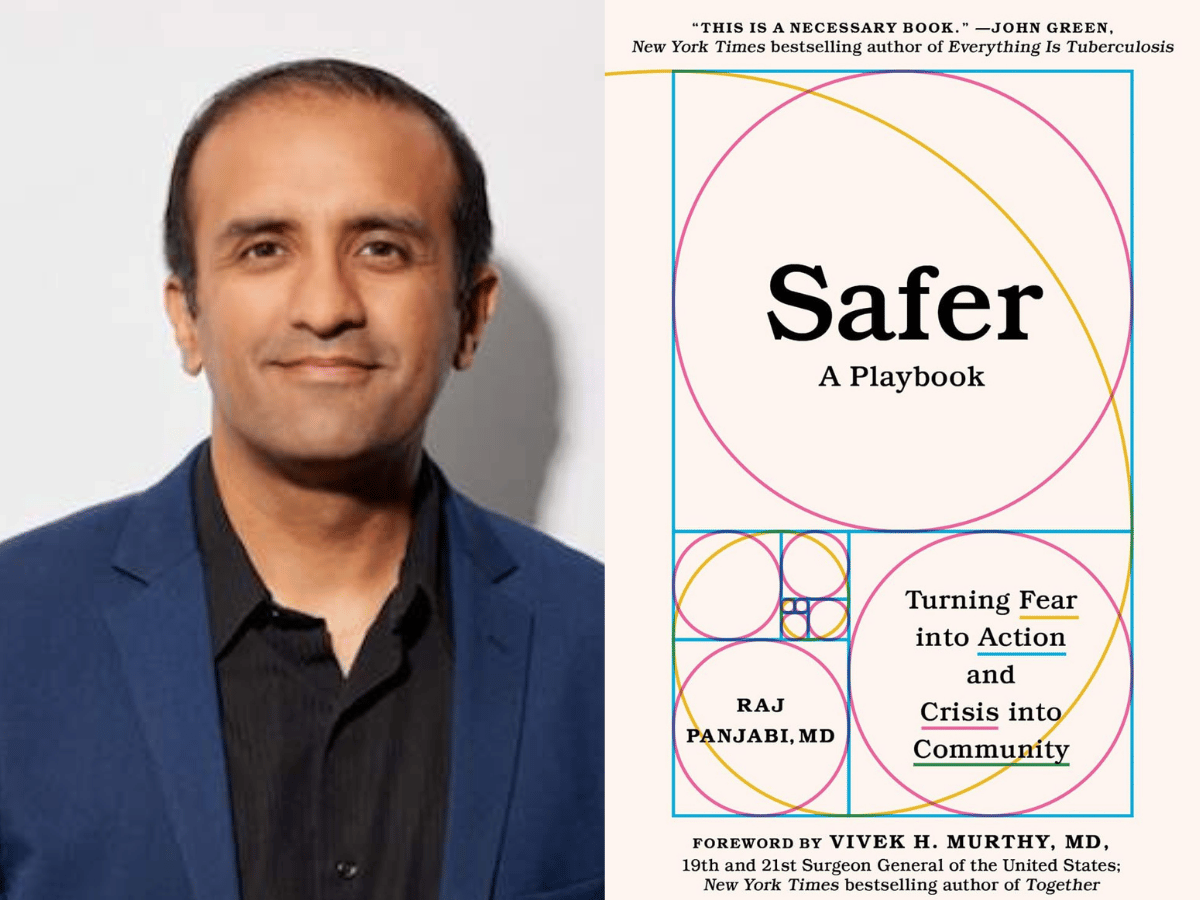
Raj Panjabi.
Photo courtesy Raj Panjabi
Health
His family, his patients, and you
Physician shaped by frontline COVID work navigates personal and global anxieties in ‘Safer,’ yielding lessons for the next crisis
In public health communities, February 2020 is sometimes called “the lost month” — weeks when a novel coronavirus spread, largely undetected, from person to person and country to country. Hospitals were already beginning to strain under the weight of the crisis, but most people — and their governments — carried on as though everything were normal.
It’s a behavior known as normalcy bias, and it’s one of the very human — but very dangerous — responses to crisis explored in a new book by Raj Panjabi, a physician and a part-time Harvard Medical School lecturer on medicine at Brigham and Women’s Hospital.
Normalcy bias is the tendency to “assume that things will continue as they always have been,” Panjabi writes in “Safer: A Playbook — Turning Fear into Action and Crisis into Community.”
He fell for it himself. During the “lost month,” Panjabi flew to London for a conference, flew home, and took his family, including a young daughter with a serious heart condition, on a vacation to Disney World. “What would I have done differently if I had grasped the gravity of the situation?” he writes. “Nearly everything.”
“What would I have done differently if I had grasped the gravity of the situation? Nearly everything.”
Raj Panjabi
“Safer” aims to give healthcare workers, government officials, and citizens the tools to better respond to a crisis, whether a global pandemic or a personal health issue. In other words, Panjabi said, his book is “for people who are trying to distinguish between a crisis and a bad week.”
Panjabi, a native of Liberia, is well-schooled on the topic. As a child, he and his family watched their home country descend into authoritarianism and civil war, always asking whether each new level of violence or dysfunction was the one that meant it was time to leave. After they resettled in the U.S., Panjabi trained as a physician and went on to serve in public health positions, returning to Liberia during the 2013-2016 Ebola outbreak. Years later, he served as a frontline responder to the COVID pandemic and helped the Biden administration create a playbook for future public health emergencies.
“Safer” emerged from a question Panjabi wrestled with in all those contexts, and as a parent navigating his daughter’s health condition: What can we do for one another when the systems we rely on can no longer keep us safe?
Part of the answer came from his experiences during COVID, amid lockdowns, mask mandates, and social distancing. Panjabi worked in head-to-toe PPE at the MGH Chelsea Community Healthcare Center, then came home, stripped off his clothes in the garage, and hurried to a burning-hot shower.
“It was very hard to feel safe, but it was always possible to become, and to feel, safer. That’s the way we think about risk in public health: We can sometimes not get risk to zero — risk is rarely zero — but you can always reduce it.”
The book takes the form of a series of “plays,” inspired by the idea of a playbook: tools or ways of thinking used by hospitals and governments and adapted for the micro-emergencies of everyday life. Among the plays is one called “Turn Denial into Action”: establish objective “if/then” triggers — an observable trigger, paired with a specific action, agreed upon in advance of a crisis, to reduce the kind of normalcy bias that stunted COVID response in February 2020.
In government, that might be, “If case counts rise above X, we declare a national emergency.” In the living room, “We review our daughter’s period heart ultrasound results, and if her heart’s ability to pump blood drops below normal, we will act before she develops heart failure.”
“Rather than constantly questioning an aging parent about driving safely or waiting for a crash, agree together in advance on warning signs like an unexplained dent or getting lost on a familiar route,” Panjabi said. “The trigger does the watching, and you sit down and talk about other ways to get around when one appears.”
Another play, “Dial Up Protections,” is based on the idea that “risk in a crisis isn’t just individual, it’s social,” he writes.
Panjabi drew inspiration from the late Harvard Medical School physician and Partners in Health co-founder Paul Farmer, whose “biosocial” model of disease revolutionized the field of global health. A person’s risk is never borne alone, Farmer argued, but influenced by their access to healthcare, their socioeconomic status, and the people around them.
Panjabi saw this situation play out in Chelsea, whose low-income, heavily immigrant population suffered some of the highest per-capita infection rates in the U.S. during the height of the pandemic.
“Chelsea residents were being told, like in many parts of the country, that if they got COVID they should isolate in a separate bedroom. Well, if you’ve got seven or eight people living in a two-bedroom apartment, you can’t do that,” he said, frustration evident in his voice years later.
But, he added, just as risk is a shared burden, so too is protection.
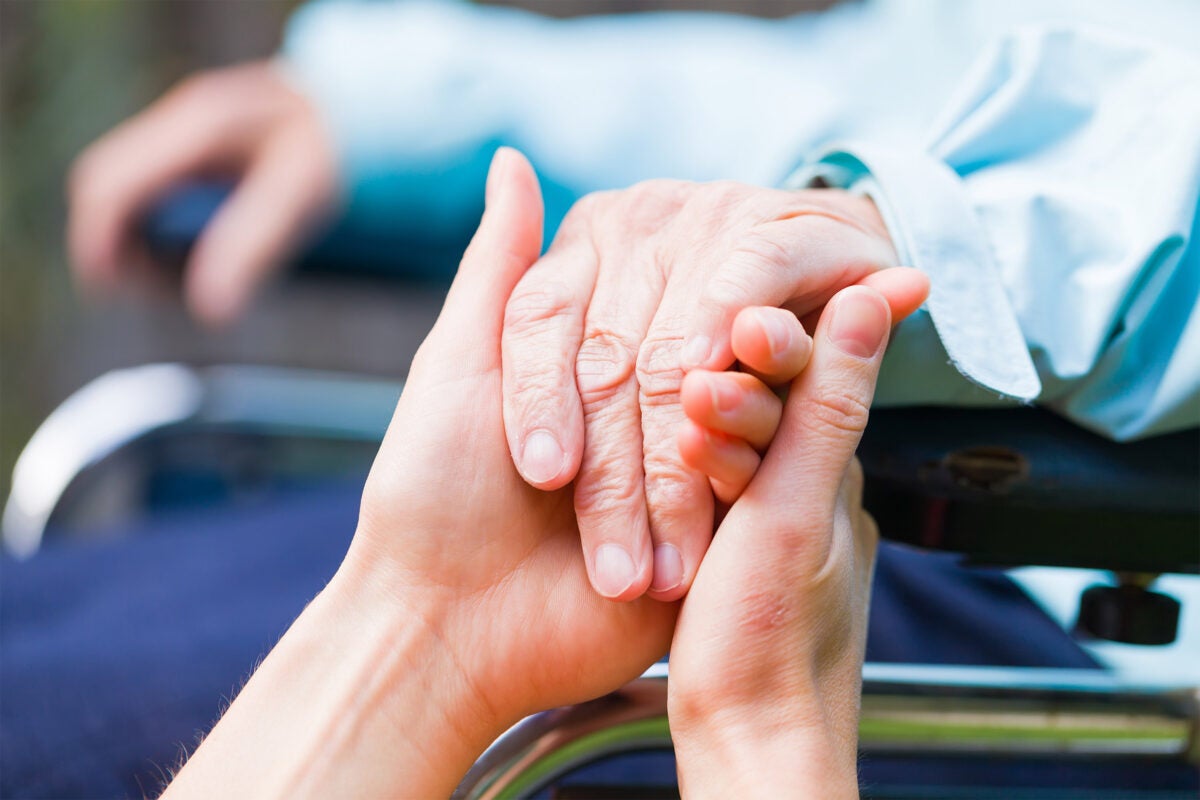
The same principle applies in everyday crises, Panjabi said. Perhaps a loved one has gotten a divorce and is experiencing new risks: loneliness, financial stress, legal issues. For each risk, what protections can counter it? Is anyone checking up on them on Sunday nights, when loneliness is highest? Do they know their custody rights? Perhaps they’d benefit from seeing a counselor or therapist.
“A throughline of the book is that while our natural instinct in a crisis is to retreat, to pull inward, to lock the door, to wait it out, decades of research point the other way: Our greatest protection is not isolation, but connection,” Panjabi said. “I wanted us to feel like there was agency and hope, that there are actions we can take to navigate fear and turn it into action, navigate crisis and turn it into community.”